


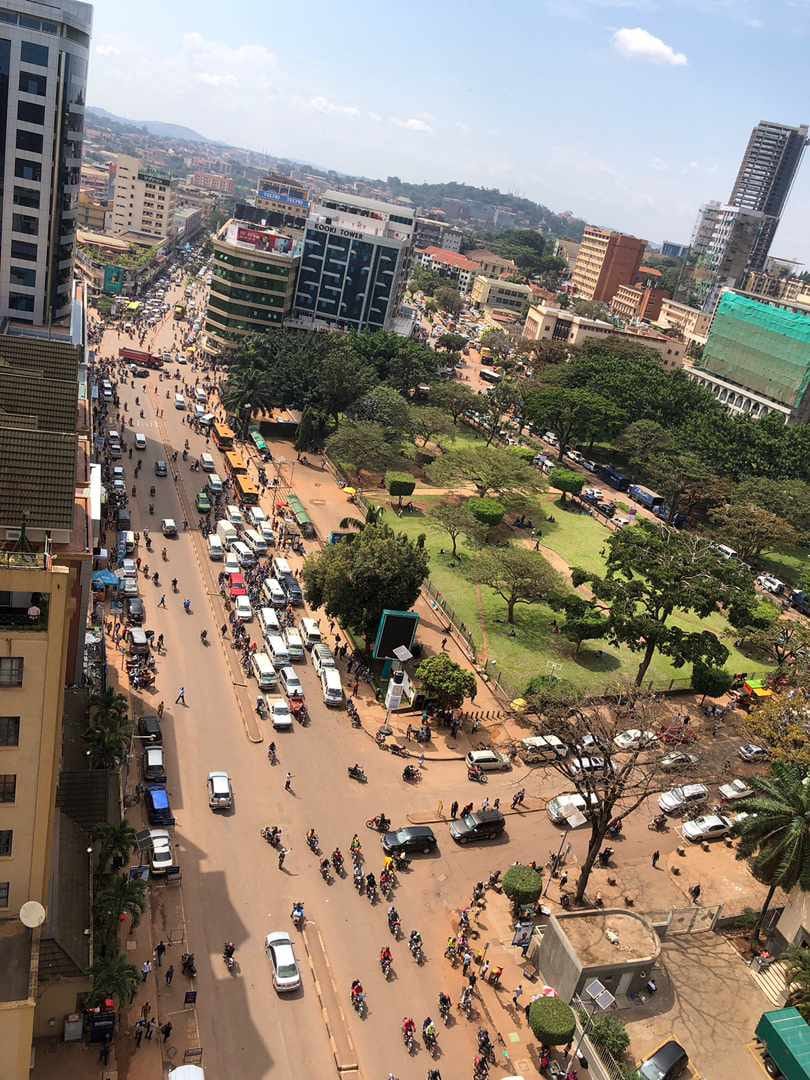
The proposal to construct a solar-powered commercial complex at Kampala City Square should be assessed within the wider framework of sustainable urbanisation, spatial planning and climate-resilient urban development.
Although renewable energy is important, attaching solar technology to a building does not compensate for the permanent loss of strategic green infrastructure.
Kampala’s rapid urban densification is already placing considerable pressure on its ecological carrying capacity.
Traffic emissions, construction dust, waste burning and diminishing vegetation continue to undermine ambient air quality. Urban trees help intercept particulate matter, absorb pollutants and sequester carbon while providing shade and moderating the urban heat-island effect.
City Square should therefore be understood not as vacant land awaiting development, but as an ecological asset delivering essential ecosystem services.
The city requires a robust green-zoning framework that protects public parks, wetlands, urban forests, ecological corridors and civic open spaces from commercial encroachment.
Such spaces form part of the city’s natural capital and are critical to stormwater attenuation, flood mitigation, biodiversity conservation, thermal regulation and public health.
A more progressive intervention would transform City Square into a flagship smart green precinct through climate-sensitive placemaking and nature-based solutions.
This could include indigenous tree canopies, permeable surfaces, rain gardens, rainwater harvesting, air-quality sensors, solar lighting, public Wi-Fi, recycling infrastructure, secure seating and carefully regulated removable kiosks.
The space could host cultural activities, environmental education and civic engagement without surrendering its public character.
Commercial investment should instead be channelled towards brownfield regeneration, underutilised properties and designated mixed-use or transit-oriented development corridors.
This would stimulate economic activity while protecting Kampala’s limited green lungs.
Smart urbanisation is not measured by the intensity of construction, but by the quality, resilience and liveability of the urban environment created.
Protecting City Square would demonstrate responsible land-use governance, intergenerational equity and Kampala’s commitment to becoming a sustainable, inclusive and climate-resilient African city.